In This Corner of the World Review Guardian
Based on a Japanese manga written and illustrated by Fumiyo Kōno, the blithe feature "In This Corner of the World" is an engrossing only sometimes jumbled accommodation by writer-director Sunao Katabuchi ("Mai Mai Miracle").
Set during the catamenia from 1935 to 1945, this film is start-rate when depicting domestic challenges in the life of its heroine Suzu Urano, but it is somewhat hollow when foreshadowing the diminutive bomb that is about to exist dropped on her hometown of Hiroshima.
"They called me a daydreamer," Suzu says in her opening narration. The melody of what sounds like "O Come All Ye Faithful" plays as she floats down a river in a boat, and this produces a treacly feeling that is soon altered when Suzu describes white clouds overhead that are "globe-trotting without joy…their emptiness I have within…will it ever exist relieved?" Such an existential query belies the number of times Suzu is called "ordinary" by others in this motion picture.
There are moments when the sheer physical beauty of "In This Corner of the World" is leap to bring a smiling to the face. The animation looks handmade and deceptively simple, and in that location is delicate coloring and a subtle iii-dimensional quality to both people and objects. Tree branches here sometimes look more real somehow than real tree branches, and at that place are likewise effects of light that are very pleasing and lifelike.
Also Read: DVDs are Dying, But Not for Anime Distributor Funimation
At one point, Suzu holds a dandelion and blows on it, and we come across the wispy white seeds float through the air. Shots like this are and so pretty that Katabuchi might have held them even longer to really make them land, but this is a picture show that is always barreling frontward very quickly, sometimes charmingly and sometimes bewilderingly.
Most bewildering here is Suzu'southward relationship with Shūsaku, the shy human being who asks to exist her married man after meeting her once. When she gets the offer, Suzu does non remember meeting him. She is told by her family unit that she does not take to accept his proposal, but Suzu does marry him and moves to the urban center of Kure, where Shūsaku lives with his own family. ("Marrying shut to home lacks excitement" is one piece of advice she hears.)
Also Read: Niche Streaming Service VRV Adds New Titles, Desktop Platform
Suzu'south nuptials night with Shūsaku definitely seems to lack excitement, though we are never as well sure about what they feel for each other. At one point later their spousal relationship, Suzu and Shūsaku are caught kissing by others, and both of them chroma. We hear gossip from their neighbors that he was "besides frail" to fight as a soldier in the war, and that he might also be "as well delicate" for his marital duties.
When they are visited by her macho childhood friend Tetsu, it most feels every bit if Shūsaku is pushing Suzu into bed with him, and this is complicated because Suzu does have feelings for Tetsu. The impression left here is that Shūsaku is besides soft for Suzu and that Tetsu is as well difficult, and this makes her frustrated and aroused. Only there are times when she seems very happy with her new life, even though nutrient rationing gets to exist difficult and air raids get more and more frightening.
Likewise Read: Netflix'due south 'Death Note' Get-go Trailer Draws Fire as Latest Japanese Story Recast With White Hero (Video)
Throughout "In This Corner of the World," Suzu is seen drawing whatever is in front of her on her sketchpad, and this has an appealing meta quality because she is in effect a drawing who is drawing a drawing. (This "frame within a frame" idea becomes especially ominous when we see a large paintbrush suddenly start daubing in colors of bombs that are falling on the screen.) Katabuchi is constantly flashing dates at us that get more than and more specific, like "December, 1944," then "March nineteen, 1945" until finally he is telling u.s.a. the time of day as well as the month and date, and this heightens a sense of dread.
Every bit things go bad in Kure, Suzu is told several times that she should go back to her domicile in Hiroshima, and of course nosotros know what will happen if she does that. At that place comes a betoken when Suzu is stuck in a flop shelter during a raid with a sweet young girl named Harumi, who cries, "I'thou hot!" every bit the bombs autumn. "Endure information technology," says Suzu stoically.
"In This Corner of the Earth" falls rather apartment whenever it tries to bargain with World War II directly, but every bit a character study of a young Japanese girl in wartime it is ofttimes beguiling. It succumbs to evasiveness and sentimentality at the end, but this does non extinguish the memory of the many funny, touching, and captivatingly odd scenes that have come before.
'Princess Mononoke' Turns 20: ten Things You Probably Didn't Know Nigh The Animated Classic (Photos)
-
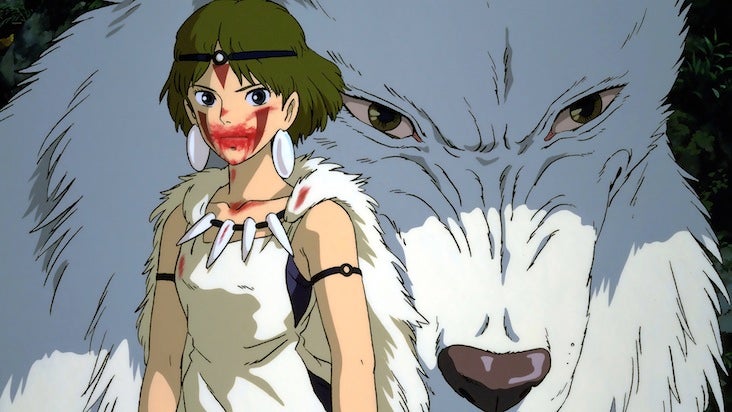
Twenty years ago, Hayao Miyazaki finished what was supposed to be his final film: a dark, tearing, nonetheless beautiful fantasy most the growing conflict betwixt man and nature. Instead, it was acclaimed as an anime masterpiece and ushered in a new era for the legendary animator that included films like "Spirited Away" and "Ponyo." As it returns to theaters for a special 20th ceremony engagement, here are some things y'all might not have known about Miyazaki'southward supernatural war epic.
Studio Ghibli -

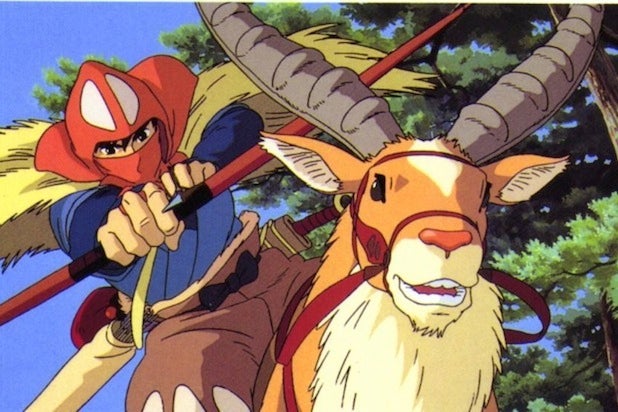
According to Studio Ghibli's making-of documentary, Miyazaki's original concept for "Princess Mononoke" was created in 1980 and involved a samurai story with a warrior'south daughter and a mount cat that gains supernatural powers. By the mid 90s, however, Miyazaki felt the samurai narrative was too rigid and no longer relevant to contemporary Japan, causing him to overhaul the story.
Getty -
The Japanese title of the film is "Mononoke-Hime," with Hime pregnant "princess." At that place is no direct translation for "Mononoke," which in this case roughly translates to a vengeful monster or spirit. Rather than brand a complete change, Miramax decided to keep "Mononoke" in the championship for the North American release.
Studio Ghibli -
Harvey Weinstein, who was then in charge of Miramax, had planned to recut "Princess Mononoke," something that Miyazaki refused to let afterwards one of his earlier films got thirty minutes removed from the American release. Miyazaki said in a Guardian interview that one of the Ghibli producers responded past sending a katana to Miramax with a note reading "No cuts."
Getty -
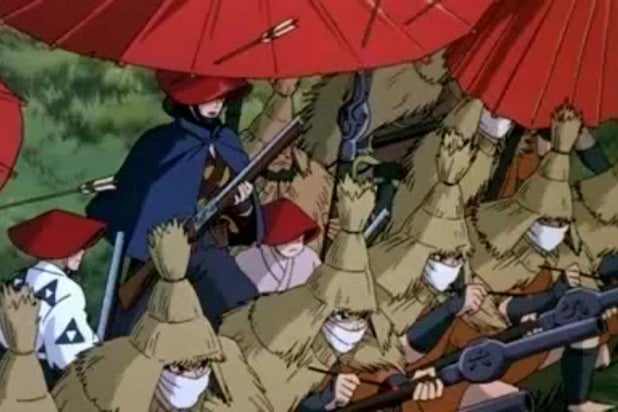
Irontown, the village attacked by the Woods Spirit, was inspired by John Ford westerns like "Stagecoach" and "The Man Who Shot Liberty Valence." Miyazaki designed Irontown to feel similar a settlement created by social outcasts much similar the ones in classic westerns while basing the details of village life in traditional Japanese community.
Studio Ghibli -
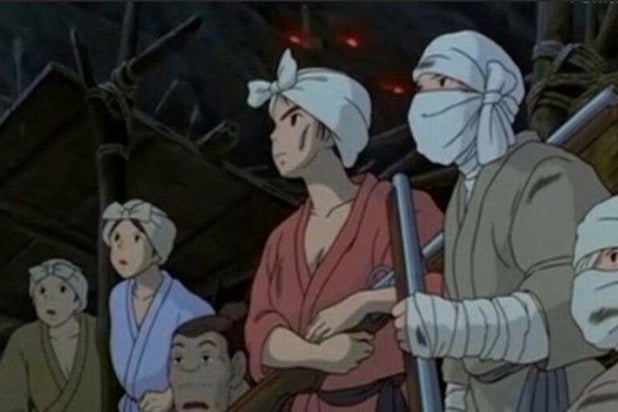
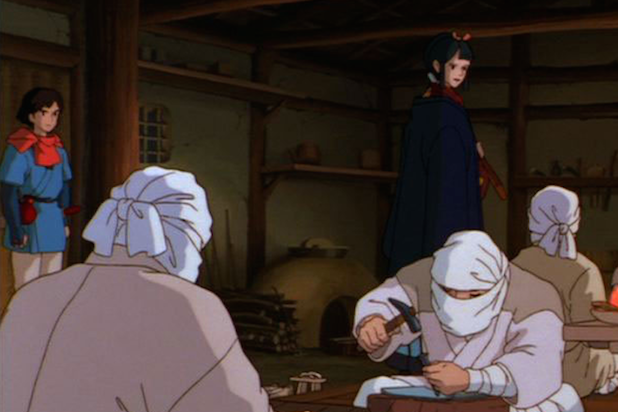
As for the iron making that pollutes San'south forests and drives Irontown's economy, Miyazaki took inspiration from the blacksmiths he lived close to as a kid during the 1940s. In the making-of documentary, Miyazaki said he enjoyed watching the process of forging iron and tried to recreate every stride in "Mononoke" while also showing the harm mining for raw fe did to Japan's environs.
Studio Ghibli -
With a budget of $23.v million (approx. $35M in today's money), "Princess Mononoke" was the near expensive anime ever at the time of release, and Miyazaki said he would not be surprise if it bombed. Instead, the film set a new domestic box office record in Nihon and, forth with "Titanic," is one of just two films released earlier 2000 that are yet in Japan's Top 10 grossing films.
Studio Ghibli -
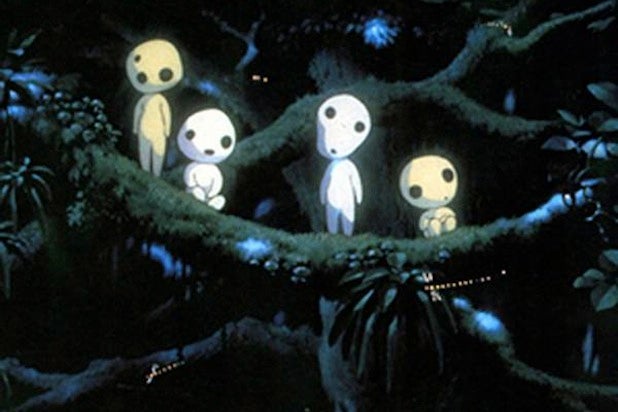
The wood surrounding Irontown is heavily based on the Shiratani Ravine, a nature preserve on Yakishima Island, located off the southernmost tip of Nippon. Since the release of "Mononoke," anime fans accept traveled to the ravine to visit San's forest, leaving behind piffling kodama statues in the trees.
Studio Ghibli -
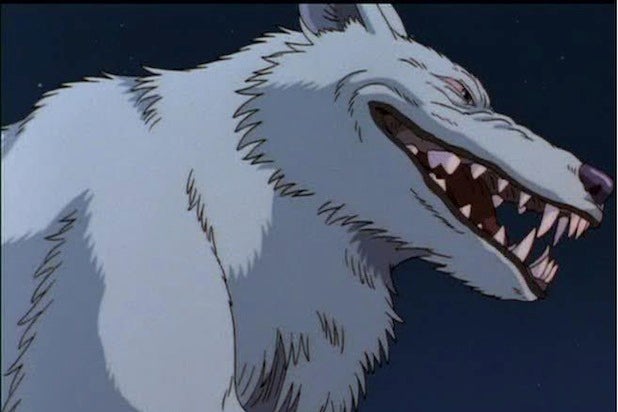
The wolf goddess Moro is voiced in the English dub by "X-Files" star Gillian Anderson, but is voiced past a male histrion, Akihiro Miwa, in the Japanese version.This is because Shinto traditions depict canine spirits, or kami, in a masculine lite regardless of their actual gender.
Studio Ghibli -
Prior to "Mononoke," Miyazaki and Studio Ghibli had been known for family films like "Kiki's Delivery Service" and "My Neighbor Totoro." To brand sure parents understood that "Mononoke" was a much dissimilar picture show, Ghibli aired commercials that featured some of the most violent scenes, including explosions and severed limbs.
Studio Ghibli -
At 136 minutes and over 144,000 blitheness cels, "Princess Mononoke" ranks in the pinnacle ten longest running animated films ever fabricated. Despite this, Miyazaki personally reviewed and corrected all the key frames in the film. Information technology is estimated that he drew or corrected approximately 80,000 cels.
Studio Ghibli




Source: https://www.thewrap.com/in-this-corner-of-the-world-review-anime/
0 Response to "In This Corner of the World Review Guardian"
Post a Comment