The Columbia Undergraduate Law Review (CULR) is Columbia University's premier undergraduate legal publication. CULR publishes long-form pieces by undergraduate students from across the world in its print journal equally well as original pieces by Columbia/Barnard students in its online periodical.
The goal of CULR is to provide Columbia University and the public with opportunities for the give-and-take of police force-related ideas and the publication of undergraduate legal scholarship.
Issuu is a digital publishing platform that makes it simple to publish magazines, catalogs, newspapers, books, and more online. Easily share your publications and get them in forepart of Issuu's millions of monthly readers.
Featured Articles from our Online Division

On the morning time of February 24, Russian forces invaded Ukraine catastrophe diplomatic efforts to resolve post-Cold War disagreements between NATO (North Atlantic Treaty Organization) members and Russian federation, the superpower built from the remnants of the USSR (Union of Soviet Socialist Republics). [1] The Office of the United nations High Commissioner for Human Rights (OHCHR) has confirmed 925 casualties every bit of March 17 and proposed that the real number could exist college. [2] The conflict has prompted a massive refugee crisis in Europe, with near 3.4 million people having fled the state of war, over 2 million of whom have taken shelter in Poland. [iii] This has prompted the Quango of the European Union to implement a temporary protection for refugees and asylum seekers fleeing from the war by augmenting "[residence rights], access to the labour marketplace and housing, medical assistance, and admission to didactics for children." [4] The World Economical Forum estimates that 16 1000000 people will be in demand of humanitarian assist as a result of the conflict, [five] and the United nations Security Council has repeatedly raised concerns almost the blockage of emergency relief channels that would atomic number 82 to a worsening of the humanitarian crisis. [6] Amongst the rapidly increasing number of military and noncombatant casualties, families' time-sensitive need for humanitarian aid, and the destruction of crucial infrastructure and health services, the relevance of international humanitarian law too every bit its protection and punishments are of timely importance.
As the New York City Section of Investigation continues its 3-year probe of the New York Police Department'southward gang database, questions are beingness raised about the database'southward constitutionality. To determine the constitutionality of the database, we have to look at the decades-long practice of criminalizing gangs in the U.s.a. and what implications it has had for policing. In society to prosecute gangs, the term itself must firstly exist defined. Even so the term "gang" in U.S. police force remains full of ambiguity. As such, while the penalties for alleged gang members are harsh, the grounds on which gang affiliation is determined are unclear—as is demonstrated by an assay of gang-prosecution laws beyond the country.
![Fighting Gentrification: Litigation is Not]()
Harlem is a cultural Mecca for Black America, giving birth to some of the nigh celebrated musicians, artists, writers, and activists in history. However, as Columbia University grows larger and larger in its population and wealth, it has been looking to expand further into W Harlem. This expansion threatens the important history of Harlem and its residents, equally the community, which would be displaced past further inroad, is what makes Harlem, Harlem. Many Harlem residents fright that the expansion of Columbia'southward campus, in add-on to destroying several acres of historic buildings, volition cause an influx of higher income residents, increasing rent prices and pushing out many of the Black and brownish residents who have lived in Harlem for generations and depend on affordable housing. Harlem is but one of many lower-income neighborhoods of color facing the reality of gentrification at the easily of municipal governments and private developers, begging the question of if and how the legal system might protect marginalized communities from the whims of the rich, white, and powerful.
New York's recent Enhance the Age legislation, passed in 2017 and phased in over the following ii years, has symbolized a delivery to reforming the youth criminal justice system in New York Country. Prior to Raise the Age, xvi- and seventeen-twelvemonth old defendants were prosecuted in adult courts, where they were subject field to longer sentences and permanent criminal conviction records that made it difficult to reenter guild. The new legislation changes the historic period at which youth nether eighteen can be tried every bit adults in criminal courtroom. While Raise the Historic period is an of import stride forward, information technology did not alter the process for youth charged with fierce felonies, still requiring their automatic prosecution equally adults.
![What is a]()
Over the next few decades, anthropogenic climate change will force hundreds of millions from their homes in a migrant crunch of unprecedented proportions. Equally global temperatures ascent, a series of "slow onset" ecology catastrophes has been set in motion; in many regions of the world, fresh water is becoming scarce, agricultural productivity is declining, and ascent bounding main levels are producing higher storm surges. [1] Modeling the furnishings of these and other factors—such equally heat stress, more farthermost weather events, and the loss of habitable land—on "livability," the Globe Bank predicts "climate alter ... could force 216 million people ... to motility by 2050." [2] While some of these displaced individuals may migrate to safer regions within their home countries, many will cull to motility to countries less economically afflicted by climate alter. Ensuring that these futurity migrants receive authorities support is necessary to guarantee that they can secure a livelihood and find customs in their new homes.
The immigration policy of the U.s. has shifted in the face of the ongoing coronavirus pandemic. Championship 42, a rarely-invoked section of the United States Code created in 1944, was revitalized by the Trump and Biden administrations to swiftly expel migrants due to alleged fears of the spread of COVID-nineteen. [1] Despite the policy'south revitalization, even so, current legal challenges to Title 42 show that there is no legal ground for such expulsions within its language. In item, the disproportionate application of the policy at the southern border of the Usa serves as show of racist motivations behind Title 42 expulsions.
A 2021 study by Pew Research Center found that nearly 90% of Americans utilize the internet, social media, or smartphones regularly to admission the news. [one] The proliferation of online information is particularly influential in high publicity cases—cases that involve terrorism or tearing criminal offence, garnering high levels of national media attention—in which juries may be skewed past the media they consume. In United States v. Tsarnaev (2021), the case of the Boston Marathon bomber currently on appeal in the U.S. Supreme Court, the risks of media bias are especially clear. In Tsarnaev's case and similarly high publicity cases, trial judges ought to exercise more rigorous voir dire questioning on media consumption in society to protect defendants' Sixth Subpoena right to a "trial by an impartial jury."
Following the murder of George Floyd in 2020, many activists initiated protests of all forms to voice their discontent with the American authorities. Social media emerged equally one prominent medium for activists to advertise their beliefs and organize protests—predominantly under the umbrella of the Black Lives Matter (BLM) movement. Nevertheless, police enforcement, peculiarly the Federal Agency of Investigation (FBI), has utilized the very social media platforms that BLM activists make utilize of in an effort to connect them to terrorist activity.
On September 11, 2001, the United states experienced the deadliest terrorr assail in its history. In plough, the events of nine/xi have had a lasting legacy on American immigration policies, leading to the creation of the erDepartment of Homeland Security (DHS), which is in charge of Customs and Border Protection, United States Citizenship and Immigration Services, and Immigration and Customs Enforcement (ICE). [one] Moreover, in 2005, Real ID legislation was introduced at the federal level as a post-9/eleven policy to assist in combating time to come terrorist attacks. This legislation was passed as a mode to standardize drivers' licenses throughout the U.South. by setting minimum guidelines individual states would need to follow to grant identification and driving permits, including requiring the verification of legal status for every applicant. [2]

In Jan 2018, the Smooth parliament adopted the 2018 Amendment to the Deed on the Institute of National Remembrance, which criminalized public speech challenge that the Polish state was responsible or co-responsible for Nazi crimes committed by the Tertiary Reich. [ane] The controversial human activity details that such claims "grossly diminish the responsibility of the true perpetrators of said crimes" and render individuals liable to a fine or 3-yr prison house sentence. [2] Although the Deed on the Institute of National Remembrance was established in 1998 to foreclose Holocaust denialism, an undeniably positive aspiration, the 2018 amendment has resulted in the Act becoming a coercive mechanism for distorting and censoring national history. [3] On Feb 8, 2021, two Polish historians, Jan Grabowski and Barbara Engelking, were convicted of violating Article 55a of the Act on the Institute of National Remembrance (2018) in their novel Dalej jest noc [Night without End] for having defendant Edward Malinowski, the mayor of the Polish hamlet Malinowo during the 2d World State of war, of abetting the Nazis. [4] Though the Act on the Establish of National Remembrance sought to protect Holocaust remembrance and demystify Poland's ambiguous part under the 3rd Reich, the proceedings of the subsequent case—Leszczyńska v. Engelking and Grabowski (2021)—reveal the inherent threat memory laws pose to historical scholarship.

Securities and Exchange Commission v. Ripple—a current case regarding the legal status of cryptocurrency—could be taken to the Second Circuit Court of Appeals (if not the Supreme Court) and set a precedent for the amount of jurisdiction that the U.S. Securities and Substitution Commission (SEC) holds over futurity cryptocurrency transactions. [1] Considering this case could designate a new legal "guardian" for cryptocurrency, it has generated pregnant interest inside the cryptocurrency community. [ii] Withal, an evaluation of cryptocurrency against the standards established in the 1946 Supreme Courtroom instance Securities and Exchange Commission v. W. J. Howey Co. points to an cryptic legal future for cryptocurrency. XRP, the cryptocurrency at issue in Ripple, appears more likely to satisfy the Howey test due to the axis in its distribution and its exhibition of vertical and horizontal commonality. Thus, despite the furor regarding this case, the concluding conclusion in Ripple may not institute a conclusive legal determination for all cryptocurrencies.

Gideon 5 Wainwright (1963) is a landmark Supreme Court case that incorporated the Sixth Amendment through the Equal Protection Clause of the Fourteenth Amendment, requiring states to provide public defenders to criminal defendants that cannot afford counsel. [1] Notwithstanding, since the Supreme Court'southward ruling, it has been commonly observed that defendants receive less than effective representation from counsel, as public defenders are often stretched too thin and forced to grapple with enormous instance loads, back-to-back trials, and bottomless funding by the state. Attempting to rectify this, the Supreme Court defined "effective assistance of counsel" in Strickland v Washington (1984), with the majority opinion adopting a loose prepare of requirements public defenders should come across. [two] This, all the same, has spawned its own issues. As Justice Marshall'due south dissenting stance predicted, the Courtroom'south attempt to define counsel ironically exacerbated the consequence by allowing courts to determine that lawyers have met the criteria of effective counsel without actually having provided information technology. Therefore, revisiting Strickland reveals that the Strickland test has done more harm than practiced, the dissenting opinion should have been considered more seriously, and the Supreme Court has a responsibility to rectify the injustices it has caused through this decision.
The works of Andy Warhol are known for their popular element and pragmatic flair. Not unlike blockchain technology, the repetitive faces of Marilyn Monroe are an highly-seasoned democratization of guild'due south likenesses. Indeed, both pose questions most cultural and individual copyright, and whether popularity excuses infringements on ownership. Cryptocurrency has given birth to a new form of engineering science responsible for enormous growth in the fine art trade and an accompanying slew of legal discrepancies. Non-fungible tokens, or NFTs, are a revolutionary kind of digital ledger that allows creators of fine art and music to tokenize unique online assets of their work. [1] Even so they come almost as an anachronism to a legal surroundings not entirely prepared to regulate them. [2]

In 2019, the U.S. Supreme Court refused to hear an appeal to the Ninth Circuit Court of Appeals' conclusion in Martin 5. Boise (2018), which asserted that "an ordinance violates the Eighth Subpoena insofar as it imposes criminal sanctions against homeless individuals for sleeping outdoors, on public property, when no alternative shelter is available to them." [1] The Supreme Court'due south refusal renders the Martin decision final, setting a national precedent for the ceremonious rights of those experiencing homelessness. However, the increased presence of hostile, or anti-homelessness, architecture in urban areas still inhibits the homeless individuals' access to public spaces, substantially placing criminal sanctions on 1's status of homelessness. The COVID-19 pandemic increases the vulnerability of the homeless population past increasing financial instability and limiting shelter capacity. The Martin v. Boise decision does not explicitly protect those experiencing homelessness from anti-homeless architecture; however, its ground on the Eighth Subpoena's protection from cruel and unusual penalisation suggests that hostile architecture similarly violates the 8th Amendment rights of those experiencing homelessness. Hostile architecture must exist explicitly challenged in courts to protect the rights of those experiencing homelessness during this particularly exigent time.

With the acceleration of man-made global warming, environmental regulatory frameworks take come under severe scrutiny for not tackling climate issues with enough urgency. The appearance of space tourism presents even greater challenges, since environmental regulations must now encompass innovations they were never intended to govern. At the center of this ambivalence is the Clean Air Act (CAA), the landmark 1970 law responsible for regulating U.Southward. atmospheric pollutants. The CAA laid the groundwork for the Ecology Protection Agency (EPA) to constitute air quality standards for a variety of pollutants, including particles whose ecology implications were discovered afterwards the police force'due south passage. Notably, the CAA does not explicitly regulate whatsoever emissions sources, just rather establishes unlike standards based on the classification of the emission source as either stationary or mobile. [i] Still, the growing space tourism industry raises new concerns about the CAA's regulatory prowess, considering space rockets exhibit characteristics of both mobile sources (lower emissions standards) and stationary sources (higher emissions standards). Yet, the CAA does non include a resolution for potential mobile-stationary source classification overlap. [2] Given that technology moguls such as Richard Branson intend to expand space tourism thirty-fold in the next decade, space tourism has the potential to go 1 of the main contributors to greenhouse gas emissions in the near future. Hence, the classification of rockets every bit mobile or stationary is incredibly consequential. [iii]
![]()
In 2019, model Emily Ratajkowski faced a copyright lawsuit from lensman Robert O'Neill. O'Neill, a paparazzi photographer, had taken a street photograph of Ratajkowski. Ratajkowski later on reposted the photo on her Instagram story, a feature of Instagram where i tin temporarily post a picture for 24 hours, with an boosted caption superimposed over the photograph stating "mood forever." [1] Under Section 106 of the Copyright Law of the United States, O'Neill held the exclusive right to authorize the reproduction of the photograph. Citing this exclusive right, O'Neill after filed a complaint against Ratajkowski for her "unauthorized reproduction" of the photograph. Notwithstanding, Department 107 of copyright law outlines certain exceptions that fall nether the category of "off-white use," stating that if the original work is reproduced "for purposes such as criticism, comment, news reporting, teaching (including multiple copies for classroom use), scholarship, or inquiry," so the reproduction does not constitute copyright infringement. [2] Ratajkowski's lawyers argued that the Instagram story is fair use. In the photograph, Ratajkowski holds a bouquet of flowers over her face, blocking her face from paparazzi; in her repost, Ratajkowski likewise adds the text "mood forever." Ratajkowski'south lawyers thus argued that the add-on of the text transformed the photograph into a critique of the "abusive, aggressive, and harassing practise of paparazzi." [three]
Every new Apple release comes with a media blitz about the new iPhone'south improved camera quality, the speed of the M1 processor chip in the latest MacBooks, or the sound quality of the next generation AirPod Pros. An Apple product's blueprint interface is carefully curated—all with the goal of arousing a feeling of sleekness and style in the consumer. Notwithstanding, despite Apple's futuristic facade, its labor model is backwards and securely problematic. Indeed, Apple'due south cobalt batteries are built on the backs of child labor in mines, causing astringent physical harm to children and violating international standards of man rights.

Orwellian fears of mass-regime use of neurotechnologies and the rise of a "thought police'' are seemingly moving across fiction to the status quo. Novel neurotechnological applications take emerged in the courtroom, in public policy decision-making, and even in legal education through conferences and coursebooks. Municipalities are aware of this motility: they have actively funded it. Sustaining this proliferation is millions of dollars worth of enquiry grants from government agencies like The John D. and Catherine T. MacArthur Foundation. [1] Yet, these investments are not without reason. The current applications of neuroimaging technologies—namely fMRI, EEG, and PET browse evidence—are extensive and versatile when verifying the credibility of witness testimony. From proof of disability to waive Miranda rights to disability to grade criminal intent, besides as prove that certain plaintiffs are still experiencing pain later their accidents, the possibilities are endless. [ii] The virtually contempo development, the P300 EEG response tool, is already in use by the CIA, though details surrounding usage are currently undisclosed. [iii]
As Americans currently look to reform the nation's criminal justice system, with its high incarceration rates and immense racial disparities, plea bargaining is an important consideration. In a plea bargain, as well known as a plea bargain, the defendant agrees to plead guilty or "no contest," in exchange for the prosecutor to drop i or more charges, reduce a charge to a less serious offense, or recommend to the judge a specific sentence that is acceptable to the defence force. In turn, this allows the accused to receive a reduced sentence. [1] A plea bargain is a facet of the American criminal justice organisation that initially became commonplace in the 1920s in society to expedite the trial court process. The prevalence of plea bargaining is constantly being reexamined as the United States reconciles constitutional principles and legal precedent with celebrated prejudices in its criminal justice organization.

As cyberattacks and data leaks increasingly get a part of daily news, their touch on is more noticeable across every field of society. More importantly, cyberattacks with significant political and ceremonious implications take begun affecting electoral systems—a serious threat to democracy and international homo rights. Indeed, the increasing number of cyberattacks has direct implications for the rights laid out in the International Covenant on Civil and Political Rights (ICCPR) and the Universal Declaration on Human Rights (UDHR). For instance, the "Ghostwriter" assail of 2017 targeted elections of several European Union (EU) fellow member states to foment distrust in the North Atlantic Treaty Organisation (NATO). Following this series of attacks, the Eu formally assigned responsibility to Russian operators in September 2021, implying undue external interference on political systems had occurred. Also in September 2021, a suspected internal cyberattack to Hungarian polling systems caused nationwide ballot interference, hindering free participation in public diplomacy, liberty of expression, and voting rights. [1] Thus, as data analytics tin facilitate interference with civil and political liberties besides as enable armed attacks and military strategies, data and cybersecurity rights—the rights determining how to collect, process, use, or disclose personal and private information information—should be seen every bit a logical extension of human rights.

This past Nov, the U.S. Supreme Court heard oral arguments for New York State Burglarize & Pistol Association v. Bruen, a instance challenging a strict New York state gun law. This marks the first time the Court has taken upwardly a major Second Amendment case in more than than a decade. After two hours of questioning, a majority of justices seemed poised to strike down the constabulary, which restricts citizens from carrying concealed handguns outside the dwelling unless they bear witness a heightened or unique need, known equally a "proper cause," to do then. [one] Considering the Court's recent 6-iii bourgeois supermajority, the justices will likely rule the New York constabulary unconstitutional. In plough, the New York case could have lasting ramifications, endangering current restrictions on guns in public spaces such as bars, sports stadiums, and subways, and ushering in a new era of weakened gun control laws, increased litigation, and constitutional questions regarding where and when i tin carry a gun in public.
On Oct 7, 2021, the Polish Constitutional Tribunal issued a judgment that threatens to fragment existing frameworks of European law, challenging the legitimacy of international agreements over country sovereignty. In a 10-2 majority, its Thousand 3/21 judgment claimed that select provisions of the Treaty of the European Union (TEU) were "inconsistent" with the Polish Constitution, ultimately placing Eu primary law beneath the Smoothen Constitution in the hierarchy of legal authority in the state.
Over the terminal decade, Kenya has implemented new legislation to ensure legal equality between men and women in marriage. However, at that place is yet a lack of equality between spouses, particularly in reference to matrimonial property and custody. This stands in conflict with Kenya's obligations as a ratifying political party to the 1981 Convention on the Elimination of all Forms of Discrimination Against Women (CEDAW), which requires that member states ensure that men and women be treated equally during, after, and outside of spousal relationship. In club to comply with the standards of international human rights police force laid out in CEDAW, Kenya must revise its 2013 Matrimonial Act and the 2014 Union Act and amend the 2016 Legal Aid Act to guarantee women legal equality.
Last month, plaintiffs in Whole Adult female's Wellness v. Jackson filed an emergency request to block Texas'south new law prohibiting nearly all abortions. [1] On September 1, the Supreme Court denied their asking, allowing the nation'due south most restrictive ballgame constabulary to get into outcome. To fully grasp this example'south significance, it is necessary to examine the content of the Court'southward conclusion, the dissents, and the key legal questions that the judgment leaves behind.
The United Nations (United nations) Convention on the Rights of the Child (CRC) guarantees youth the human right to be protected from threats. According to the convention, which was ratified by 196 UN fellow member nations, all children are entitled to the "inherent correct to life" and teaching, with the goal of these rights being the "development of the child's personality, talents and mental and physical abilities to their fullest potential." Of all the threats children confront, climate alter is, without a doubt, proving itself to exist the about formidable and existential. Today, the planet increasingly hurdles over temperature records, while extreme weather phenomena worsen in intensity and frequency each year. It has become increasingly evident that, due to climate alter, children will lack an surround conducive to their development in the coming decades.

May 2021 clashes in the Gaza Strip betwixt the Israeli Defense Forces and Hamas, Gaza'due south de facto government, take acquired the Israel-Palestine conflict to capture international attention yet once again. The disharmonize tin be dated back to the early 20th century, when the British Empire first took command over what was and then known as the Palestinian mandate afterward the stop of the First Globe War. Since then, the region has seen bitter disputes betwixt the Arab bulk and the Jewish minority over the ownership of the land. The disharmonize intensified after the United Nations (Un) proposal to sectionalisation the territory in 1948, which culminated in the eviction of more 700,000 Palestinians in an event known equally the Nakba, also as increasing Israeli infringement upon the delineated Palestinian lands. Since 2005, Israel has committed to a process known equally "distanciation," in which Israel reduced its directly military occupation of Palestinian territories, leaving the strip of Gaza to stand alone.
Over the past year and a one-half, COVID-19 has ravaged the planet. Withal, in the past few months, while the adult earth, spurred past high-efficacy vaccines, has enjoyed relative normalcy, the developing world has suffered the worst of the pandemic. This disparity has sparked argue around whether the World Trade System (WTO) should grant an Intellectual Holding (IP) waiver for engineering related to COVID-19 vaccine production. This waiver would protect national governments that issue a compulsory license—the right to produce a patented product—to its companies for the vaccine from legal activity by other members. The resulting increase in producers would theoretically fuel a decrease in vaccine prices, making vaccines available to poorer nations.
Post-obit a series of country-led cases against technocratic giants, Ohio attorney general David Yost attempted another path to regulation through a 2021 lawsuit demanding that Google be alleged a public utility and Google Search go a public utility in the state of Ohio. Such a lawsuit, if successful, would subsequently place Google under the supervision of the Public Utilities Commission of Ohio (PUCO). Public utilities are generally defined as individual and public entities that provide essential service to the public, most frequently in association with energy and telecommunication establishments.
Featured Roundtable Contributions
As the mental health crunch in the Usa grows, the U.S. Census Bureau reveals that clinically significant symptoms of depression and feet accept more tripled since the coronavirus pandemic began. [1] The question of what legal protections exist for those with mental illness within the realm of healthcare is more prevalent than ever. There are certain protections in place through the ADA for individuals suffering from mental wellness illnesses such as blocking employers from discriminating against individuals with mental illness conditions, right to privacy of medical information, and providing accomodations when needed. [2] Since the inception of the ADA, there take been great strides in the implementation of the ADA's provisions within covered entities. However, many barriers yet existed despite the implementation of the ADA. Stemming from inadequate provisions in the policy itself, the ADA failed to mandate parity between mental and physical inability benefits.

The legal history of the recognition of labor rights consists of judicial balancing between employers' business organization interests and laborers' interests in fair labor practices. In post-revolutionary labor combination cases, union members were fined because English common laws were withal in use––nether which making labor combinations was an indictable offense. [1] In the case Republic v. Hunt (1842), vii journeymen in Massachusetts were charged for forming a union. [two] The Massachusetts Supreme Court established that labor combinations were not inherently illegal unless an organizations' goals or practices were themselves fraudulent, false, forceful, or otherwise "criminal or unlawful." [3] Afterwards, The Supreme Court In re Debdue south (1895) upheld the federal government'south ability to apply injunctions against labor strikes. [4] In 1894, employees of a railroad car manufacturer went on strike and disrupted business organisation in the Chicago expanse. [5] Strike leaders refused to halt their activities afterwards an injunction was issued in federal courtroom. On entreatment, the Supreme Court sided with the employers to protect the public's interest in interstate commerce. [6]
Integral to a strong republic is the existence and protection of its secrets. Failing to safeguard sensitive data could endanger the condom and security of a nation, too every bit that of its citizens. Throughout history, nations across the globe have kept secrets — whether they involve the preservation of military strategies, intelligence, or covert communications, making certain that a country's secrets stay secret is critical to the establishment and conservation of their ability.

In guild to understand the legal means that allow us to continue our governments answerable for ecology damage, it is crucial to have a holistic perspective on the evolutions and historical foundations of environmental police.
Environmental litigation is based on a recently established legal framework. Indeed, most major environmental statutes were passed between the late 1960s and early on 1980s, with the most pregnant pieces of legislation passed during the Nixon administration. [one] On January 1, 1970, Nixon signed the National Environmental Policy Act, an important first footstep in the emergence of national environmental goals and policies. Subsequently that year, Nixon created the Environmental Protection Agency (EPA), which has since get a key institution in environmental law. Ii of the most of import laws governing the EPA were passed by Congress over the next 2 years: The Clean Air Deed of 1970, which directs the EPA to gear up standards for what kind of pollutants may be released into the air, and the Clean Water Act of 1972, which instructs the EPA to set standards for what pollutants may be released into lakes, streams, and rivers. Although this legal framework is fairly recent, it has been quite static: the The states has gone almost 30 years without major new environmental legislation. This inactivity, attributable to the growing partisanship of the ecology bug, means that while the climate crisis is apace accelerating—the last v years in human history were the 5 hottest on record—we are currently treatment ecology crises with decades-former legislation.
The perception of humanitarian intervention has recently shifted from a mere subset of international law governing the utilize of force to a legitimate, legal reason for state of war. Using humanitarian intervention as a justification for foreign interference has become increasingly commonplace in the international arena. However, despite its widespread application, the apply of this justification remains highly controversial; critics point out that the humanitarian label runs the gamble of masking the hidden geo-political motivations of nations.
The beginning of the Biden Assistants was characterized past a singled-out shift away from the immigration policies of the Trump Administration. Namely, President Biden'due south recent temporary guidelines for Immigration and Community Enforcement (Water ice) sought to redefine the grounds for displacement. These provisions centered around deporting individuals who recently crossed the border, pose a threat to national security, or have committed "aggravated felonies."
We are the only country with a written constitution that does not prohibit discrimination based on sex," Congresswoman Jackie Speier (D-CA-xiv) noted earlier the Business firm of Representatives on Wednesday, March 17. Speier spoke moments earlier the body voted on H.J. Res. 17, an endeavor intended to remove the ratification borderline on the Equal Rights Amendment (ERA). The three-sentence resolution volition accomplish its 98th birthday this year. Afterwards Virginia ratified the subpoena in 2020, it finally has the required thirty-eight states to theoretically pass.
In the midst of a global pandemic, signs of hope accept started to sally from beneath the shadow of COVID-19. SARS-CoV-2 has killed millions and fundamentally changed the earth, just there is cause for optimism with the development and implementation of life-saving vaccine technology. Faced with an unprecedented public health crunch, experts agree that the quickest style for the world to return to normal atmospheric condition involves vaccinating every bit many people as possible, establishing herd immunity, and decreasing the transmission of COVID-19.
Across the United States, states have taken steps to address homelessness, ranging from the enforcement of state supreme court decisions to the passage of sweeping legislation. At the aforementioned time, individual state legislatures have become battlegrounds for homelessness rights in states that effort to reduce the visibility of homeless individuals rather than address the systemic bug behind the rise in homelessness. To this finish, many states have resorted to indirect anti-homelessness legislation, including laws and ordinances that ban loitering and begging. This Roundtable addresses state laws on homelessness, the intersection of judicial activism and homelessness, the 19th century roots of United kingdom of great britain and northern ireland constabulary on homelessness, and the path toward decriminalizing homelessness.
Abortion is ane of the most intimate and difficult choices many women make at least once in their lives. Indeed, virtually ane in four American women take an abortion by age 45. Opponents of ballgame, even so, claim that Americans accept long opposed this medical practice and frame Roe v. Wade every bit an "anomaly." However, the history of abortion in the United States reveals how common and necessary the procedure has been. This Roundtable explores abortion police force prior to Roe v. Wade, the Roe five. Wade instance itself, abortion police force following Roe v. Wade, and the hereafter of abortion law.
U.S. legislative acts pertaining to health care rights have historically limited undocumented immigrants' access to such benefits. While alternative paths to access are available at the moment, they are far from sufficient for undocumented immigrants seeking treatment. This Roundtable explores the existing healthcare rights of undocumented immigrants, barriers to farther admission, and the consequence of the COVID-19 pandemic on these rights.
The International Criminal Courtroom (ICC) is an autonomous international tribunal that is authorized to condemn individuals responsible for genocide, crimes confronting humanity, war crimes, and crimes of assailment. Established past the Rome Statute in 2002, the ICC is the first and only international court with such jurisdiction. One hundred and 20-three countries accept signed on to the Rome Statute, which establishes the court's jurisdiction, construction, and telos to "guarantee lasting respect for the enforcement of international justice." This Roundtable explores the role of the ICC in international law, its promising aspects and shortcomings, and the hereafter of the institution.
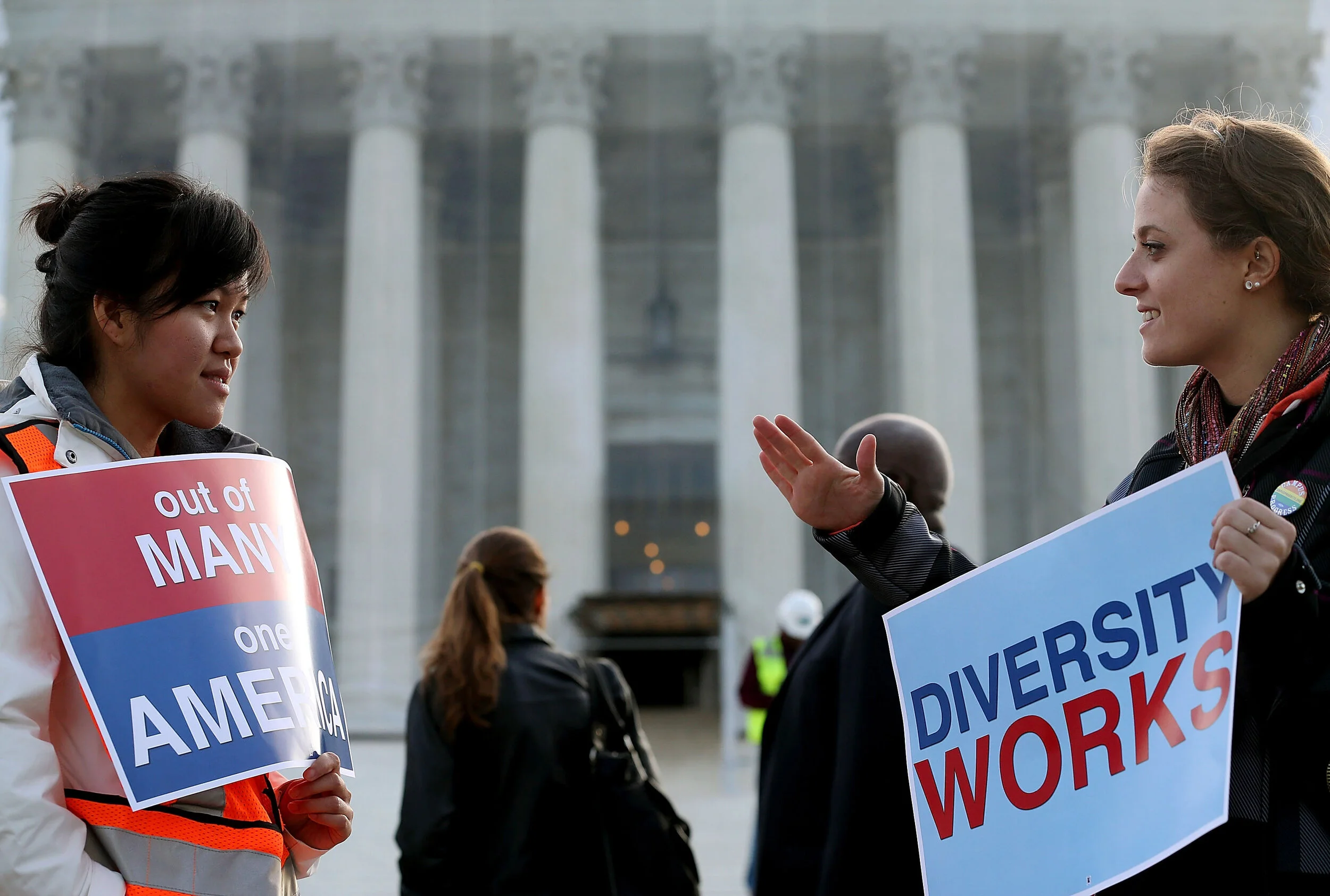
Multifariousness is an exalted concept for many reasons, ranging from its practical relevance to operational operation, to its broad promise of social inclusion. Information technology is this latter appeal that has rendered diversity, in the eyes of many, a veritable democratic platonic. This Roundtable explores how affirmative action became such an explosive national debate, offset with Bakke, continuing through Harvard College, and projecting into the future.
While platforms such as Google, Facebook, and Twitter have resisted existence labeled as publishers, their decisions over what and what not to moderate increasingly mirror the domain of editorial organizations. Compounding the event is these companies' outsized influence as intermediaries, and even gatekeepers, for man expression. In general, legislators have exempted social platforms from responsibility for what their users publish. This Roundtable will explore the development of the police force that cements this protection: Section 230 of the Communications Decency Act of 1996.
This Roundtable focuses on Harris Funeral Homes. We first provide a history of Title Seven and the Equal Employment Opportunity Commission, and then go along to contexualize Harris Funeral Homes past cartoon upon related LGBTQ+ discrimination cases, and finally conclude with analysis and its implications.
Heed In
Depression of the Country: Subscribe to our Podcast!
Featured Episode: Because the Court
by Daniella Apodaca and Marker Gyourko
In this episode of "Low of the State," Daniella Apodaca and Mark Gyourko trace the guiding legal history and theory of the Supreme Court from the latter half of the 20th century to the present. The CULR podcasters are joined by Adam Liptak, the Supreme Courtroom contributor for The New York Times, and Professor Michael Shumsky, a Columbia Police Lecturer and active Supreme Court litigator at Kirkland & Ellis. Daniella and Mark appraise the role of originalism, textualism, and judicial activism in Court history, questioning whether the establishment can neatly fit into either a conservative or liberal tradition. Tune in to learn more about Court'due south contempo historical transformations, aberrations, and lessons, final with a consideration of how the Roberts Court deals with Trumpism today.







0 Response to "Colombia Law Review Practing Medicine Without a License"
Post a Comment